
Getting your Wix site to rank higher in 2026 demands a meticulous approach beyond basic keyword stuffing. Your success hinges on optimizing 42 specific technical, on-page, and local SEO signals proven to influence search engine algorithms. This comprehensive checklist provides the precise actions small business owners and marketers need to take within Wix and Wix Studio. It covers everything from fundamental settings to advanced indexing considerations for Google's ever-evolving crawler, ensuring your site doesn't just exist online but thrives in organic search.
What follows is the exact 42-point checklist our team works through on every Wix and Wix Studio engagement — the same one we use when a client''s organic traffic has flatlined for six months and they need a real diagnosis. Some of these take ninety seconds in the Wix dashboard. Others require thinking like an engineer about how Google''s crawler renders your site. All of them either move rankings or unblock pages that should be ranking and aren''t.
We''ve organized it the way we''d actually run an audit: foundation first, then crawl and index, then on-page, then local, then the AI-search signals nobody is writing about yet. Skip ahead if you know your foundation is solid — but the foundation is almost never solid.
Foundation: the eight settings that quietly break everything
Before a single keyword conversation, these need to be right. We audit roughly forty Wix sites a quarter and at least one of these is wrong on every site that''s underperforming.
- Connect Google Search Console with the verified-property method, not the URL prefix. The "Domain" property type in Search Console captures www, non-www, http, https, and every subdomain in one shot. URL-prefix properties miss redirects and split your data across four phantom properties. If you''ve been chasing a "traffic drop" that turned out to be www. vs. non-www, this is why.
- Pick one canonical domain and 301 everything else. In Wix: Settings → Domains → set the primary, then make sure the others point to it with a permanent redirect, not a frame or cloak.
- Turn off "Hide from search engines" on every page individually. Wix has a global setting and a per-page setting. The global one is usually fine. The per-page one gets toggled accidentally during a redesign and silently kills indexing on the one page you care about.
- Enable Wix''s server-side rendering for dynamic pages. Velo collections and dynamic page templates default to client-side rendering on some plan tiers. Googlebot can technically render JavaScript, but it''s slower, less reliable, and crawl budget is real.
- Audit your robots.txt for accidental Disallow lines. Wix lets you edit it directly now. We''ve seen
Disallow: /left over from a pre-launch staging push more times than is comfortable. - Confirm your sitemap is auto-generating and submit it manually. Wix generates
/sitemap.xmlfor you, but you still have to paste the URL into Search Console for the first submission. Then check it again — pages added after launch don''t always show up without a Wix-side republish. - Set a real favicon and a real Open Graph image at the site level. These don''t affect rankings directly. They affect click-through rate, which feeds into rankings.
- Switch on HTTPS for every URL. If you migrated from another platform, audit redirects to make sure no
http://version of a deep page is still resolving with a 200.

Crawl and index: making sure Google can actually see what you built
You can write the world''s best page about plumbers in Phoenix. If Googlebot can''t reach it, render it, and decide it''s worth indexing, none of the other work matters.
- Run the URL Inspection tool on five randomly chosen pages. Not just the homepage. Look at the rendered HTML — if your main heading or body copy is missing from the rendered output, that''s a JavaScript-execution problem and it needs fixing before anything else.
- Check the "Pages" report in Search Console for "Discovered — currently not indexed." This is Google telling you it knows the URL exists but doesn''t think it''s worth its time. Thin content, duplicate content, or low-authority pages cluster here. Either improve them, consolidate them, or noindex them.
- Look for "Crawled — currently not indexed" pages. Worse than the above — Google looked and decided it wasn''t worth keeping. Almost always a content-quality issue.
- Audit your internal linking depth. Any page more than three clicks from the homepage is at risk. Wix''s default navigation patterns push location pages and blog archives deeper than they should be. Add contextual links from high-authority pages.
- Add a real HTML sitemap or location index page if you have more than fifteen location, service, or product pages. The XML sitemap helps Googlebot. An HTML index page helps both Googlebot and humans.
- Set canonical tags on every page. Wix does this automatically, but if you''ve added URL parameters for tracking (UTMs, filters, sort orders), the canonical needs to point back to the clean URL or you''ll fragment your ranking signals across a dozen near-duplicates.
- Configure pagination correctly on blog and product listings. The old
rel="next"andrel="prev"tags are deprecated, but each paginated page still needs a self-referencing canonical and a clear path back to page one. - Find and fix every 404 in the Search Console "Not found" report. Either restore the page or 301 it to the closest equivalent. Letting broken URLs sit there wastes crawl budget and leaks ranking authority from the pages that linked to them.

On-page: the ten signals that actually correlate with rankings
If a single "SEO checklist" item gets recycled to death, it''s "write a good title tag." That advice is fine; it''s also fifteen years old. Here''s what matters now.
- Write title tags around 50–60 characters that lead with the primary keyword, then the modifier, then the brand. Not because Google reads them that way — because users scanning a SERP read them that way. Roof Repair in Austin, TX | Same-Day Estimates — Acme Roofing outperforms Acme Roofing - Welcome to our website every time.
- Write meta descriptions that include the keyword and a concrete reason to click. Google rewrites about thirty percent of them, but a good one survives often enough to matter.
- Use exactly one H1 per page that matches search intent, not your brand voice. "Wix Web Design in Kansas City" beats "Bringing Your Vision to Life" for a service page targeting that term.
- Build a proper H2/H3 hierarchy that mirrors how the page reads. Skipping from H1 directly to H4 confuses screen readers and accessibility crawlers — and accessibility signals feed into ranking now.
- Front-load the most important content above the fold with a clear answer to the search query in the first two paragraphs. The "inverted pyramid" structure isn''t just for journalism.
- Aim for 1,500–2,500 words on commercial intent pages and 2,000–4,000 on informational ones. Word count isn''t a ranking factor in itself, but topical depth is, and depth produces words.
- Add a table of contents with jump links on any post over 1,200 words. This earns sitelinks in the SERP and improves dwell time.
- Optimize images the right way: WebP format, descriptive filenames (
kansas-city-roofing-team.webpnotIMG_4823.jpg), specific alt text, and width/height attributes set explicitly to prevent layout shift. - Add internal links with descriptive anchor text from at least three other pages on the site. "Click here" is a wasted opportunity; "our advanced Wix SEO services" is a ranking signal.
- Mark up everything with JSON-LD structured data — Organization on the homepage, Service on service pages, LocalBusiness with full NAP on location pages, FAQPage where you have FAQs, Article on blog posts, BreadcrumbList everywhere. Wix''s built-in schema is a starting point, not the finish line.
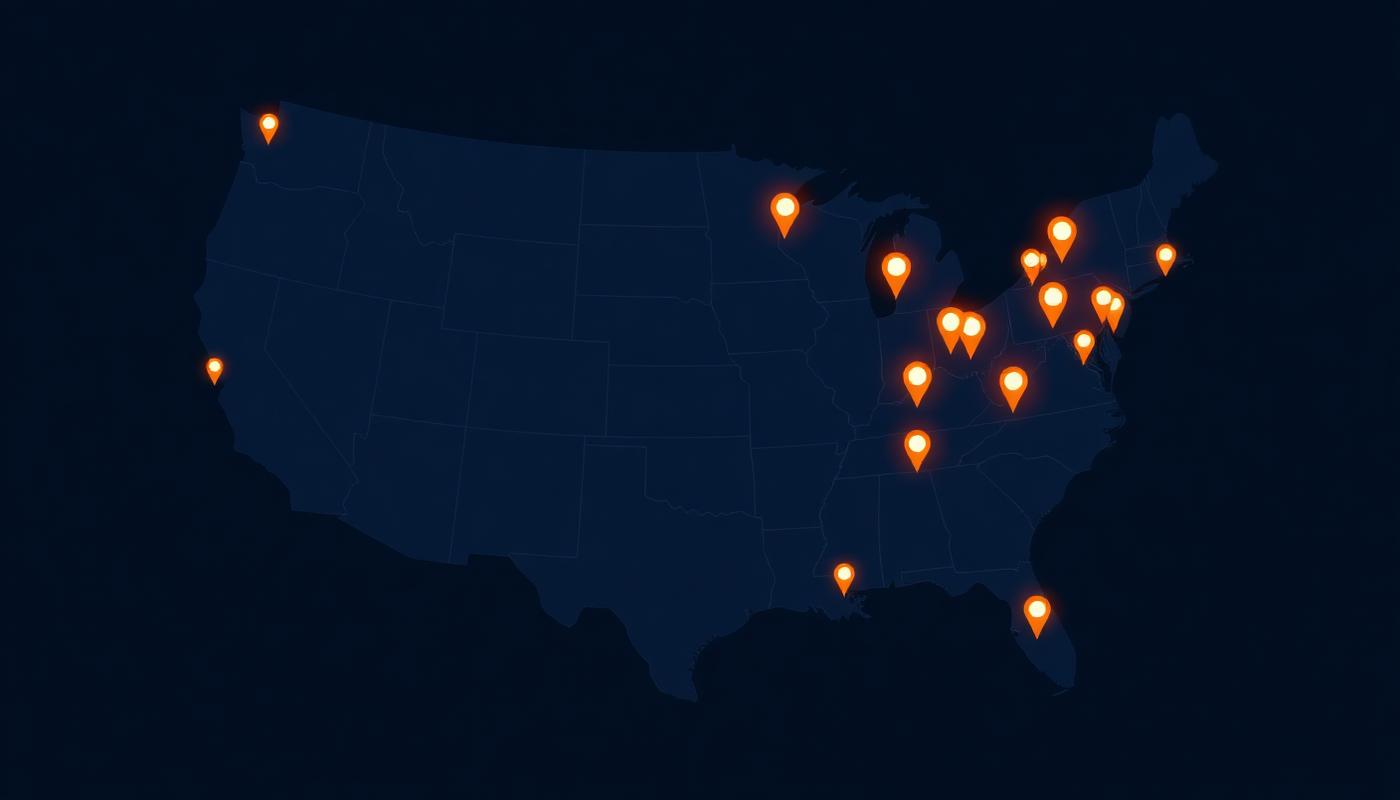
Local SEO: the signals that matter when "near me" is in the query
If you serve a defined geographic area, the next eight items are usually higher-leverage than anything in the on-page section.
- Claim, verify, and fully complete your Google Business Profile. Every category, every attribute, every service area, hours updated for every holiday, photos added monthly, posts published weekly. Half-completed profiles are why competitors outrank better-built websites.
- Embed a Google Map of your business on your contact page using the proper Maps embed code, not a screenshot.
- Make sure your NAP (Name, Address, Phone) is identical across your website, Google Business Profile, Yelp, Bing Places, Apple Business Connect, and every major directory. "Suite 200" vs "Ste. 200" vs "#200" counts as three different addresses to a citation crawler.
- Build city-specific landing pages for each metro you serve — but make each one genuinely unique. Distinct stats, named neighborhoods, local industry callouts, a real testimonial from that city. Templated city pages with only the city name swapped are a textbook reason for a manual penalty.
- Earn local backlinks deliberately. Chamber of commerce, local newspaper features, sponsorship pages from local nonprofits, "best of [city]" roundups. One link from a respected local domain often outweighs ten generic directory links.
- Request reviews on a steady cadence, not in a burst. Twenty reviews in a week looks suspicious. Two reviews a week for ten weeks looks natural and produces a healthier ranking lift.
- Respond to every review — five-star and one-star alike. Response rate is a ranking factor in the local pack.
- Use city-and-service combinations in URLs like
/wix-services/kansas-city-morather than/locations?city=kc. Clean, keyword-rich URLs still outperform parameter-driven ones.
AI search: the signals that are quietly redefining what "ranking" means
If you stopped reading SEO advice in 2023, this section will feel new. ChatGPT, Perplexity, Claude, and Google''s AI Overviews now intercept queries that used to go to ten blue links. The signals that get you cited by an AI overlap with traditional SEO, but they''re not identical.
- Publish a
/llms.txtfile at your site root with a one-line summary, a brief paragraph, and a flat link list to your major pages. ChatGPT, Perplexity, and Claude crawlers read this when they don''t want to parse your JavaScript shell. Treat it like a press kit for AI. - Structure your content so individual paragraphs answer questions in full. AI systems extract passage-level answers, not whole-page summaries. A paragraph that begins "Wix websites can rank on Google because…" and answers the question completely is more citable than a paragraph that says "as discussed above…"
- Add a FAQ section to every commercial page with real questions and direct answers. Mark it up with FAQPage JSON-LD. Answer the question first, then explain — never the reverse.
- Use entity-rich language. Name the city, the industry, the specific tool, the certifying body. AI models build internal knowledge graphs from named entities; vague pronouns get filtered out.
- Build authority through reviews and citations across the open web. AI systems weight what third parties say about you heavily. A five-star reputation on Trustpilot, G2, Clutch, and your industry''s vertical directories influences AI recommendations even when those pages aren''t directly linked from your site.
- Publish original data, surveys, or case studies. AI systems disproportionately cite sources that produce unique numbers. "A 2026 study by Acme found that 73% of…" is the kind of sentence that gets cited verbatim across hundreds of downstream queries.
- Keep your sitemap fresh and your
lastmoddates honest. AI crawlers recrawl on a tighter schedule than Google. Old content that hasn''t been touched in two years gets deprioritized in their indices faster than in Google''s. - Test your visibility quarterly. Ask ChatGPT, Perplexity, and Google''s AI Overviews the queries your customers actually use. If you''re not in the citations, look at who is, and reverse-engineer what they''re doing that you''re not.
How to actually run this checklist
Don''t try to do all forty-two in a weekend. We typically spread a full audit over four to six weeks:
- Week one: Foundation (items 1–8) and crawl/index (9–16). This is the diagnostic phase — you''ll uncover problems you didn''t know you had.
- Week two and three: On-page (17–26) across your top twenty pages by traffic potential. Don''t spread thin; depth on the few pages that matter beats shallow updates everywhere.
- Week four: Local (27–34) if you''re a local business, or skip to AI-search work if you''re not.
- Week five and six: AI-search signals (35–42) and remeasurement. Use Search Console, your analytics, and direct AI-search testing.
The compound effect of getting all forty-two right isn''t additive — it''s multiplicative. A site with strong foundations, clean indexing, deep on-page work, real local signals, and AI-ready content structure outranks sites that have any one of those areas in great shape and the others neglected.
This is what we do for clients on the Advanced SEO engagement and what every site on our managed care plan gets continuously, not just once. If you''d rather hand the whole list to someone who runs it weekly across dozens of Wix sites, book a free audit and we''ll send you back the specific items your site is missing.